
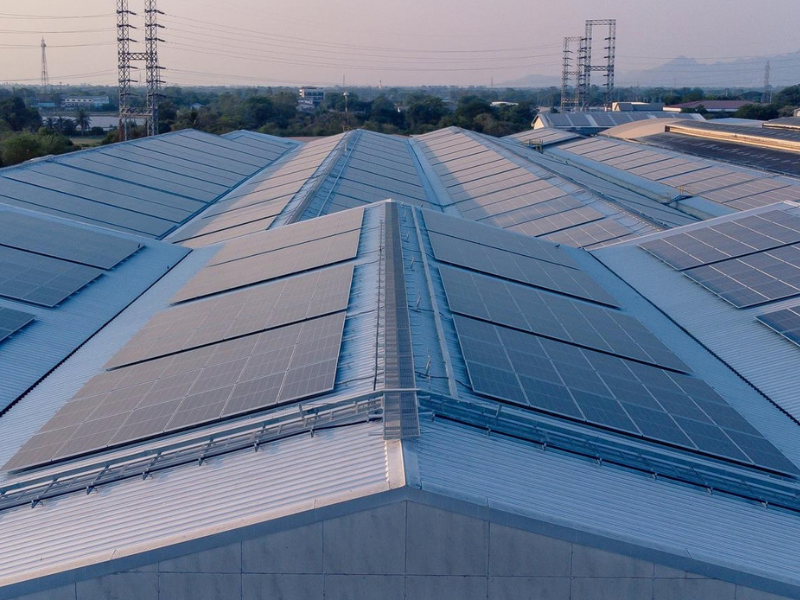
A significant change to commercial solar incentives took effect on 1 October 2026, opening federal solar support to larger commercial systems.
Eligible commercial solar systems greater than 100 kW and up to 1 MW can now access support through Small-scale Technology Certificates (STCs), potentially reducing upfront installation costs.
For Victorian businesses planning larger solar installations, this creates a valuable opportunity to reduce their investment.
Here’s what you need to know.
What Changed on 1 October 2026?
Previously, STC support generally applied to eligible solar systems up to 100 kW. Under the expanded Small-scale Renewable Energy Scheme (SRES), larger installations can now qualify.
This change is particularly relevant for:
- Manufacturing facilities
- Warehouses and distribution centres
- Agricultural businesses
- Large retail sites
- Offices and commercial buildings
The Australian Government has legislated this expansion. See the Clean Energy Regulator’s official guidance.
Although commonly called a commercial solar rebate, the incentive is delivered through STCs rather than a fixed government payment.
How Does the Commercial Solar Incentive Work?
STCs represent the renewable electricity an eligible solar system is expected to generate over a specified period.
These certificates have financial value and can generally be applied as an upfront discount through the solar installer, reducing installation costs.
Eligible mid-scale solar systems receive a fixed five-year deeming period, used to calculate certificate entitlements.
How Much STC Value Could Your Business Receive?
Under the expanded scheme, eligible commercial solar installations could benefit from an upfront discount of around 20% on installation costs.
Example: 250 kW Commercial Solar System
Approx. $50,000 STC value*
This indicative example demonstrates how STC support could help reduce the upfront investment required for a larger commercial solar installation.
*STC value varies based on location, system details, eligibility and market price. The actual discount may differ and is not guaranteed.
What Determines the STC Value?
Four main factors influence the calculation:
- System Capacity: Larger eligible solar installations generally generate more STCs.
- Geographic Location: Australia’s solar zones have different ratings based on expected solar generation.
- Deeming Period: Eligible mid-scale systems receive a fixed five-year period.
- STC Market Price: Certificate values fluctuate, affecting the final discount.
The simplified calculation is:
Estimated STCs = Eligible system capacity (kW) × Solar zone rating × Deeming years
Estimated STC value = Eligible STCs × STC market price
Actual entitlements depend on applicable scheme rules.
Businesses can refer to the Clean Energy Regulator’s mid-scale solar guidance to understand potential certificate entitlements.
Can Businesses That Started Projects Before October Still Qualify?
Yes, potentially.
Businesses that began planning, procurement or construction before 1 October 2026 may still qualify.
What matters for eligibility is the installation date.
The Clean Energy Regulator considers a system installed when it is first capable of producing and delivering electricity, generally around testing and commissioning.
Therefore, an eligible project that started before October may qualify if the system was installed on or after 1 October 2026.
Can You Expand an Existing Commercial Solar System?
Potentially, yes.
For example, an existing 80 kW system expanded by another 40 kW may qualify as a 120 kW mid-scale installation, provided the systems are electrically connected and other eligibility requirements are satisfied.
In this example, STC entitlement would apply to the eligible new 40 kW capacity, not the original installation.
Businesses considering extensions should confirm eligibility against the Clean Energy Regulator’s requirements.
When Can Businesses Apply for the New STCs?
The expanded eligibility rules have been in effect since 1 October 2026.
However, the Clean Energy Regulator expects applications for mid-scale STCs to open in mid-to-late November 2026.
This means qualifying installations completed from 1 October can become eligible for STCs, with applications submitted once the process opens.
Businesses planning installations should ensure their system design, commissioning and supporting documentation meet the applicable requirements.
Does Every System Greater Than 100 kW and Up to 1 MW Qualify?
Not automatically.
Eligible installations must meet requirements relating to approved equipment, installer accreditation, electrical compliance, planning, network connections and existing solar infrastructure.
System capacity alone does not guarantee STC eligibility.
What About the Battery Rebate?
The federal Cheaper Home Batteries Program is also available to eligible businesses.
However, under current requirements, batteries must be connected to eligible solar PV systems with less than 100 kW of capacity.
Eligible battery systems generally require 5–100 kWh of nominal capacity, with STC support available for the first 50 kWh of usable capacity.
Batteries connected to new mid-scale solar systems above 100 kW do not currently qualify for this particular incentive.
What Does This Mean for Victorian Businesses?
The expanded scheme now offers businesses considering larger commercial solar installations an opportunity to reduce upfront costs.
However, system size should still reflect electricity consumption, daytime operating hours, available roof space, grid limitations and future energy requirements.
A properly designed installation can help businesses maximise solar generation while taking advantage of applicable incentives.
Final Takeaway
Since 1 October 2026, eligible commercial solar installations greater than 100 kW and up to 1 MW have been able to qualify for upfront STC support.
For some businesses, this could mean tens of thousands of dollars in potential incentive value, depending on the project.
At Bespoke Solar, we design commercial solar solutions around your business’s energy needs while helping assess available incentives.
Planning a commercial solar installation? Talk to Bespoke Solar to explore the right system size and potential STC benefits for your business.