
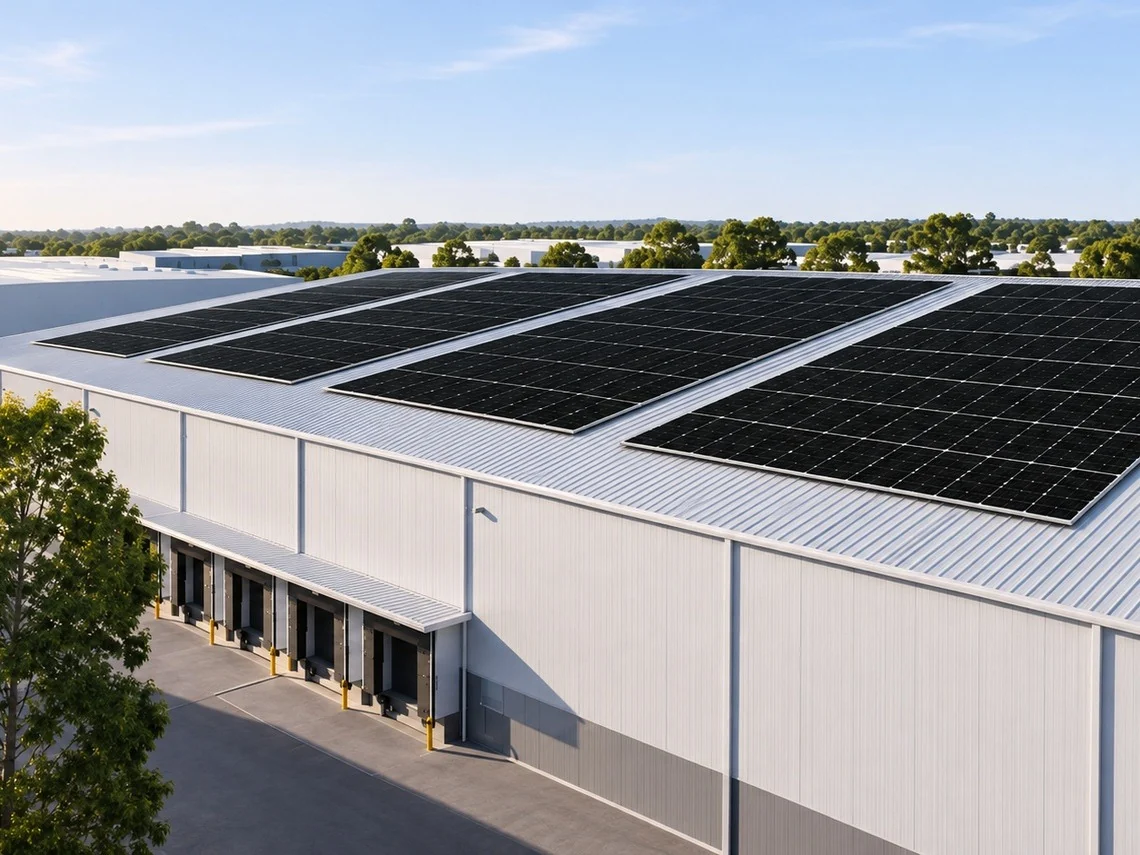
Keysborough warehouses can have substantial electricity demand from lighting, refrigeration, ventilation, machinery and vehicle charging. With suitable roof space, solar can help reduce grid electricity purchases, especially when operations run during daylight hours.
But choosing a commercial solar installation Melbourne provider should start with your warehouse’s electricity consumption, not just a panel count.
Here’s how to assess system size, savings and battery storage.
Why Does Solar Suit Keysborough Warehouses?
Storage facilities, distribution centres and industrial businesses in Keysborough have different energy requirements.
A daytime logistics operation may use solar electricity as it’s generated, while a refrigerated warehouse or evening-shift facility may require substantial power after sunset.
Commercial solar panels can reduce daytime grid consumption, but exported electricity may earn less than electricity consumed onsite.
Businesses evaluating commercial solar panels Melbourne options should therefore prioritise how generation matches their daily electricity demand.
Well-designed commercial solar electric systems account for operating hours, equipment loads and future expansion.
What Size Solar System Does a Warehouse Need?
The Victorian Government’s commercial solar guidance identifies 50–100 kW systems as common examples for commercial warehouses and 100–200 kW for larger facilities.
System size | Potential application |
30–50 kW | Smaller commercial premises |
50–100 kW | Warehouses with moderate daytime demand |
100–200 kW | Larger warehouses and industrial facilities |
Above 200 kW | High-demand sites requiring individual assessment |
These ranges are indicative, not site-specific recommendations.
A 100 kW system typically requires approximately 450–600 m² of clear roof space, according to Victorian Government guidance.
Before a commercial solar panel installation, assess:
- Electricity bills and interval meter data
- Roof condition, structural capacity and shading
- Grid connection requirements and export limits
- Future refrigeration, machinery and EV charging needs
Professional commercial solar PV design services should evaluate these factors before recommending capacity.
A suitable commercial solar power installation should match business demand rather than simply fill the available roof.
How Much Could a Keysborough Warehouse Save?
Savings depend on annual solar generation, onsite consumption, electricity tariffs and export arrangements.
The Australian Government’s solar guidance for businesses recommends examining electricity consumption patterns before selecting a system.
Consider a hypothetical warehouse generating 100,000 kWh of solar electricity annually:
Factor | Illustrative annual value |
Onsite consumption: 70,000 kWh at $0.20/kWh | $14,000 saved |
Exports: 30,000 kWh at $0.05/kWh | $1,500 potential credit |
Total annual electricity benefit | $15,500 |
This is a hypothetical calculation, not a guaranteed savings estimate. Export credits apply only where suitable arrangements exist. Installation, financing and maintenance costs are excluded.
Businesses considering commercial solar power Melbourne projects should request financial modelling using actual consumption data and realistic electricity tariffs.
Does Battery Storage Make Financial Sense?
Battery storage allows warehouses to store surplus solar electricity for later use.
For example, a Keysborough distribution centre operating evening shifts may generate excess electricity during the day while requiring additional power after sunset.
A battery could store some of that electricity, potentially reducing evening grid purchases.
Storage may also help manage certain demand charges or support essential equipment during outages, provided the system has appropriate capabilities.
However, a warehouse already consuming most of its solar generation onsite may see limited additional financial savings from battery storage.
Before investing, compare installation costs with expected electricity savings, usable capacity and operational benefits.
When evaluating commercial battery installers Melbourne, consider system compatibility, warranties and long-term support.
Explore Bespoke Solar’s battery storage solutions.
Businesses adopting electric vehicles may also investigate commercial EV chargers Melbourne. Planning a commercial EV charger installation Melbourne alongside solar can help accommodate charging schedules and future electricity requirements.
Commercial vs Residential Solar Panels
When comparing commercial vs residential solar panels, the main differences involve system capacity, electricity demand and installation complexity.
Both commercial and residential panels use photovoltaic technology, although larger commercial systems often require more detailed electrical assessments.
The distinction in commercial solar panels vs residential is primarily about overall system design rather than completely different panel technology.
What Solar Incentives Are Available?
Since 1 October 2026, eligible solar installations greater than 100 kW and up to 1 MW can qualify for federal Small-scale Technology Certificates (STCs).
The Clean Energy Regulator’s mid-scale solar guidance explains the applicable requirements.
The Victorian Energy Upgrades program may also provide discounts for eligible 30–200 kW installations through accredited providers.
For commercial solar panel installations Victoria, incentives depend on equipment, system capacity and compliance requirements.
A commercial solar power installation Victoria project should assess available incentives before proceeding. Eligibility is not automatic.
How Do You Choose the Right Commercial Solar Installer?
When comparing commercial solar installers Melbourne, look beyond installation price.
Experienced commercial solar installers should offer:
- Site-specific roof and electricity assessments
- Realistic generation and savings estimates
- Grid connection and compliance guidance
- Equipment warranties and ongoing maintenance support
For searches such as commercial solar panels installation Melbourne or commercial solar panel installation Melbourne, prioritise proposals supported by actual site data.
Compare commercial solar panel installers on equipment suitability, warranties and future expansion options.
A commercial solar installer in Melbourne should also explain ongoing servicing arrangements, including access to commercial solar repair Melbourne support.
For businesses exploring commercial solar panels in Melbourne, reviewing completed installations provides useful insight.
For example, Bespoke Solar’s 136.8 kW Nikpol commercial solar and battery installation in Heatherton demonstrates experience designing larger business energy systems.
Final Takeaway
Commercial solar can help Keysborough warehouses reduce electricity purchases, but the best system isn’t necessarily the largest one.
System capacity, operating hours, battery storage and future requirements should guide the investment.
At Bespoke Solar, we design commercial solar solutions around individual business energy needs.
Own or operate a warehouse in Keysborough? Contact Bespoke Solar to discuss a commercial solar solution suited to your operations.